Exterior windows
Best Windows for North Alabama Homes: Frames, Glass and Style
Frame material, glass package and window style, judged against what North Alabama's long, humid cooling season actually does to a window.
By the ACM Pros team, Madison, AlabamaUpdated 9 minute read
Quick answer
For most North Alabama homes, the best choice is a vinyl window with Low-E glass and an inert gas fill, with the glass coating chosen for each side of the house. Look for ENERGY STAR certification for the South-Central climate zone, which calls for a U-factor of 0.28 or lower and an SHGC of 0.23 or lower. Fiberglass is worth the step up on hot south and west walls, and careful installation matters more than any upgrade.
Key takeaways
- In North Alabama the main job of a window is keeping summer sun out, so the glass coating matters more than the number of panes.
- Vinyl is the value answer for most homes, and fiberglass earns its higher price on exposed south and west walls.
- Look for ENERGY STAR certification for the South-Central zone: a U-factor of 0.28 or lower and an SHGC of 0.23 or lower.
- Aluminum without a thermal break belongs in commercial work, and wood suits homes whose architecture calls for it.
- Casements seal tighter than double-hungs and sliders, which matters most in a room that has always been hard to keep comfortable.
- Spend on installation before upgrades: a mid-range window flashed into a prepared opening outlasts a premium one set into a wet frame.
The ACM Pros replaces exterior windows and installs exterior doors only. We do not install interior doors or interior windows.
Most window buying advice is written for a national audience, which means it is aimed at the wrong problem for us. The best window for a home in Madison, Huntsville or Decatur is the one built for what our climate actually does to a window.
This guide looks at frame material, glass and window style the way we judge them on real houses here, and finishes with what we would actually recommend for most homes.
Start with the climate, not the catalog
Guidance written for northern states puts the priority on keeping interior heat in through a long, cold winter. Our problem is the opposite. We have a long, humid cooling season, and the main job of a window here is to keep the sun's heat out while still letting in daylight.
That single difference changes what you should look at. The solar heat gain coefficient, a measure of how much of the sun's heat a window lets in, matters more here than it does in Minnesota, and the coating on the glass does more work than the number of panes. Our winters are mild but real, so you still want a frame and glass that insulate well, but summer is where a window earns its keep.
A few other local conditions shape the choice:
- Humidity keeps steady pressure on the seals around the glass for most of the year.
- Daily temperature swings make frames and glass expand and contract, especially on walls that get full afternoon sun.
- Spring pollen settles into tracks and drainage holes, which matters more for some window styles than others.
- Storms bring wind-driven rain and hail. The April 2011 outbreak is the reminder everyone here carries of how hard weather can test a house.
How to read the numbers on a window label
Every certified window carries a label from the National Fenestration Rating Council, or NFRC, the independent nonprofit that rates window energy performance. Fenestration is simply the industry word for windows, doors and skylights. The label lets you compare products on equal terms.
- U-factor measures how easily heat passes through the whole window. Lower numbers insulate better.
- Solar heat gain coefficient (SHGC) is rated on a scale from 0 to 1. Lower numbers block more of the sun's heat, which is what you want on a sunny Alabama wall.
- Visible transmittance measures how much daylight comes through. Higher numbers mean a brighter room.
- Air leakage, when it is listed, measures how much air passes through the window itself. Lower is better.
ENERGY STAR builds on those ratings. North Alabama falls in its South-Central climate zone, where certified windows need a U-factor of 0.28 or lower and an SHGC of 0.23 or lower, according to ENERGY STAR's current criteria. You can confirm the zone for your county with its climate zone finder.
ENERGY STAR also recommends asking that the exact U-factor and SHGC of each window be written into your contract, along with a statement that the windows are certified for the location where they will be installed.
Frame material, ranked for this region
Vinyl: the value answer
Vinyl windows are the value answer, and a genuinely good one. They are dimensionally stable, which means they hold their shape, they never need painting, and they insulate well. For most homes in Madison and Huntsville, vinyl is the right starting point.
Their limits are color range and behavior on hot, unshaded walls. Dark colors absorb more heat, and a vinyl frame on a wall that bakes all afternoon works harder than one in the shade.
Fiberglass: worth it on exposed walls
Fiberglass windows cost more and earn it on exposed walls, the ones that take the most sun and weather. Fiberglass expands and contracts at close to the same rate as glass, so the seal around the edge of the glass spends its life under less stress. In a climate with a wide daily temperature swing, that is a longevity argument, not a spec-sheet flourish.
Aluminum: built for commercial work
Aluminum is strong and slim, but it conducts heat very well, which makes it a poor insulator unless the frame has a thermal break. A thermal break is an insulating strip built into the frame that separates the inside metal from the outside metal. Aluminum without a thermal break belongs in commercial work.
The original aluminum windows we pull out of houses here are the single most common reason someone calls us. If you like the slim look of metal, ask about a thermally broken frame and compare its label numbers with the other options.
Wood: when the architecture calls for it
Wood is right when the architecture demands it, and it comes with a maintenance schedule that this humidity does not let you skip. Painting, sealing and checking the sills are part of owning wood windows here, and the payoff is a look no other material quite matches.
Here is how the four compare side by side.
| Frame material | Strengths here | Watch for | Best fit |
|---|---|---|---|
| Vinyl | Stable, no painting, insulates well, strong value | Limited colors; works hardest on hot, unshaded walls | Most homes in the region |
| Fiberglass | Moves with the glass, so the glass seal sees less stress | Higher price | Exposed south and west walls |
| Aluminum | Strong, slim frames | Conducts heat unless thermally broken | Commercial work |
| Wood | Traditional look and detail | Regular painting and sealing in this humidity | Historic and architecturally detailed homes |
Glass is where the performance lives
Low-E glass with an inert gas fill is the practical baseline for any new window here. Low-E, short for low emissivity, is a microscopically thin metal coating on the glass that reflects heat while letting visible light through. The gas fill, usually argon, sits sealed between the panes and slows heat moving across the gap.
Beyond that baseline, the coating should follow the elevation, which is the builder's word for each side of the house. A west-facing wall that takes full afternoon sun has a different requirement from a shaded north wall. Putting the strongest sun-blocking glass where the sun actually hits gives you the most comfort for the money. Our guide to Low-E glass covers the options in more detail.
Is triple glazing worth it here?
Rarely. Triple glazing, with three panes instead of two, solves a cold-climate problem: holding heat in through long winters. In North Alabama the money is better spent on choosing the right coating for each wall and on installation quality, both of which matter more here.
Specific performance targets vary by climate zone and by program criteria, and those criteria change over time. That is why it pays to check the current numbers on the label rather than relying on a brochure.
Window style affects sealing more than people expect
How a window opens changes how well it seals when it is closed.
- A casement window, hinged on one side and opened with a crank, pulls its sash, the moving part that holds the glass, tight against the frame as it closes. That squeezes the weatherstrip, the flexible seal around the edge.
- A double-hung window, with two sashes that slide up and down, seals by the weight of the sash and the friction of the weatherstrip.
- A sliding window seals against a track that, in a North Alabama spring, fills with pollen.
- Fixed windows such as picture windows do not open at all, so they seal the best of any style, at the cost of fresh air.
None of that makes a double-hung a bad window. It is the right choice on most walls, it is easy to live with, and it suits the look of most homes here. But if one room has always been the hardest to keep comfortable, the operating style is worth a conversation.
Matching windows to your kind of house
The housing across North Alabama falls into a few broad groups, and each tends to point in a direction.
- Mid-century ranches often still have single-pane aluminum windows. Almost any modern window with Low-E glass is a large step up, and vinyl usually makes the most sense.
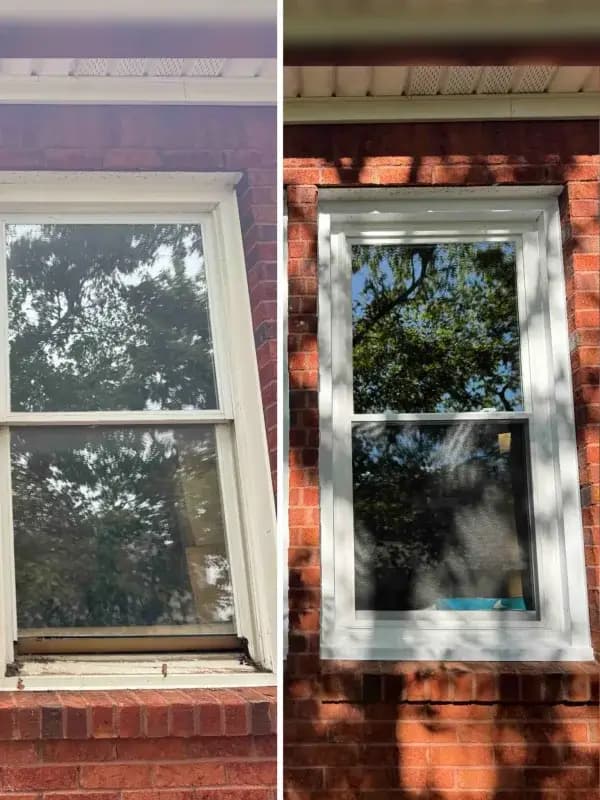
- 1980s and 1990s subdivisions often have first-generation double-pane windows whose seals are reaching the end of their life. Look for fogged glass and check the sills. Their condition decides whether an insert, a new window set inside the existing frame, will do, or whether a full-frame replacement down to the rough opening, the framed hole in the wall, is needed.
- Newer builder-grade homes sometimes have entry-level windows that were installed quickly. Replacing the worst exposures first, often the west wall, is a sensible way to start.
- Historic homes in Huntsville's Twickenham, Old Town and Five Points districts call for windows that respect the original look. Wood replacements, or exterior storm windows over the existing sashes, are often the right conversation.
What we would actually specify
For most homes in Madison and Huntsville, our recommendation is straightforward:
- Vinyl frames as the default.
- Low-E glass with an inert gas fill, with the coating chosen for each elevation.
- Double-hung windows on most walls, with casements where tighter sealing or easier reach justifies them, such as over a kitchen sink.
- Fiberglass on exposed south and west walls if the budget allows.
- Windows certified by ENERGY STAR for the South-Central zone.
That is not the only good answer, and some homes call for something different. But it is where we start, and we will explain any reason to move away from it.
Installation matters more than the window
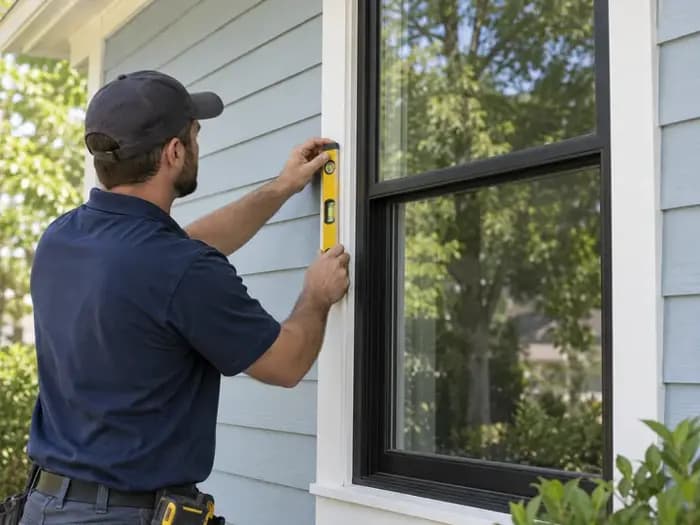
If there is one thing to take from this guide, it is this: spend the money on installation before you spend it on the window. A mid-range window properly flashed into a prepared opening will outlast a premium window shoved into a wet frame, every time.
The NFRC itself notes that its ratings do not account for how a product is installed, so even the best window will not perform as it could if it is installed poorly. Flashing, the layered waterproofing that sends water around the window, and a sill pan, a waterproof tray under the window that catches water and sends it outside, are what keep the opening dry over the long run.
Every home is different, and the best way to choose is to look at yours together. The ACM Pros offers free in-home estimates across Madison, Huntsville and North Alabama, with a written scope that names every material and prices each window opening after measuring. Request your free estimate or call (256) 585-6817.
Questions people ask
What is the most important window spec for a North Alabama home?
The solar heat gain coefficient on your south and west walls. Here the priority is keeping summer sun out rather than holding winter heat in, which is the reverse of what most national advice assumes. ENERGY STAR's South-Central zone, which covers North Alabama, calls for an SHGC of 0.23 or lower.
Is triple-pane glass worth it in Alabama?
Rarely. Triple glazing is built to hold heat in through long, cold winters. In our climate the same money usually does more when it goes toward the right glass coating on sunny walls and a careful installation.
Are vinyl windows good enough for Alabama heat?
Yes, for most homes. Good vinyl holds its shape, never needs paint and insulates well. On a wall that bakes in full afternoon sun, especially with a dark frame color, fiberglass is worth pricing as a step up.
What does ENERGY STAR certified mean for windows here?
It means the window has NFRC-certified ratings that meet ENERGY STAR's limits for a specific climate zone. North Alabama is in the South-Central zone, so check that the window is certified for that zone rather than relying on the logo alone. ENERGY STAR suggests getting the exact U-factor and SHGC in writing.
Which window style seals the best?
Fixed windows, such as picture windows, seal best because they never open. Among windows that open, casements usually seal tightest because the sash presses against the weatherstrip as it closes. Double-hungs and sliders rely more on weatherstrip contact, and slider tracks need regular cleaning in pollen season.
Should I choose wood windows for an older home?
If the character of the home depends on them, wood is often the right choice, especially in historic neighborhoods such as Twickenham. Plan on regular painting and sealing, because this humidity is hard on exposed wood. Exterior storm windows over the existing sashes are another option worth discussing.