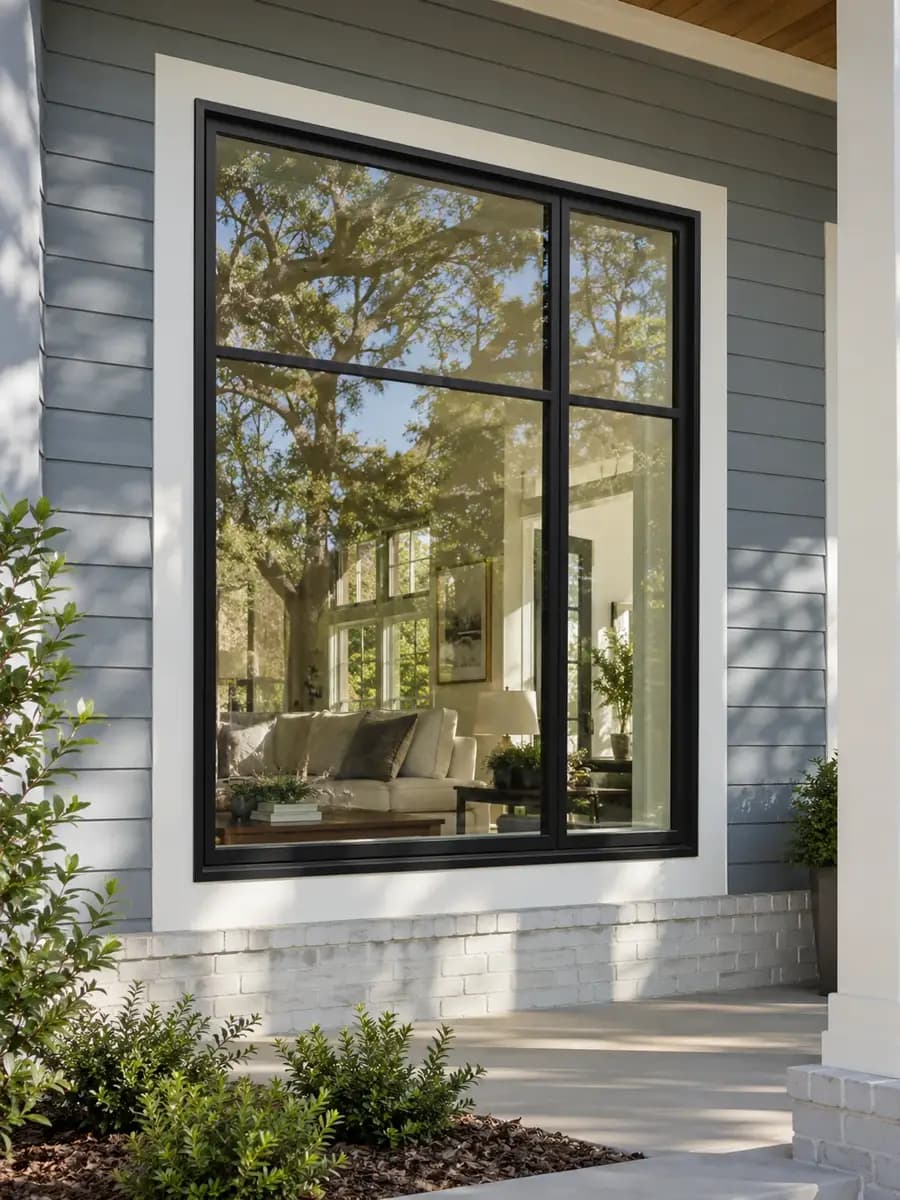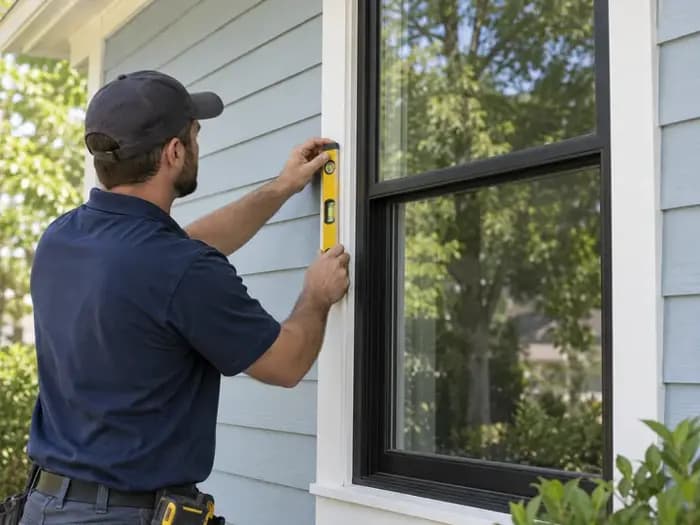
Exterior windows
Signs You Need New Windows: Five to Act On, Two to Watch
Five window problems worth acting on in a North Alabama home, and two that look alarming but usually are not.
By the ACM Pros team, Madison, AlabamaUpdated 10 minute read
Quick answer
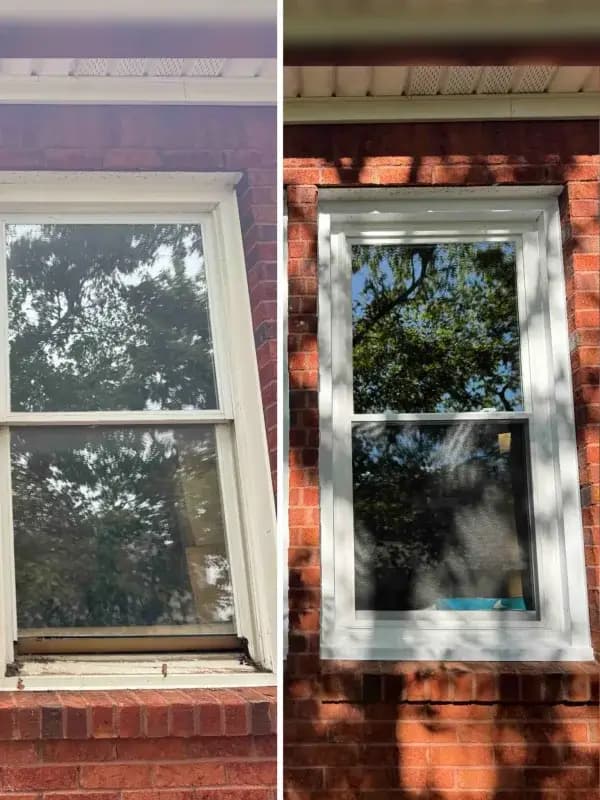
The clearest signs you need new windows are fog between the panes, sashes that bind or will not stay up, drafts at the trim, water stains or soft wood at the sill, and original single-pane aluminum windows. Soft wood at the sill is the most urgent, because it means water is reaching the framing. Drafts at the trim sometimes need only resealing, and condensation on the room side of the glass or peeling paint on wood trim usually point to humidity or paint care, not a failed window.
Key takeaways
- Fog or haze between the panes means the sealed glass unit has failed, and it cannot be repaired.
- A sash that binds in its frame can mean the frame has moved or the sill has rotted, so investigate it rather than lubricating it.
- Drafts at the trim line often come from the seal around the frame, which can sometimes be fixed without a new window.
- Water stains or soft wood at the sill are the most urgent sign, because the damage spreads into the framing.
- Original single-pane aluminum windows are not an emergency, but replacing them is the most reliable comfort upgrade in an older North Alabama home.
- Condensation on the room side of the glass and peeling paint on wood trim usually point to indoor humidity or paint care, not a failed window.
The ACM Pros replaces exterior windows and installs exterior doors only. We do not install interior doors or interior windows.
Most windows do not fail all at once. They give small signals for years: a little fog in one pane, a sash that sticks in August, a dark spot on the sill that you keep meaning to look at. Some of those signals mean the window is finished. Others mean something nearby needs attention, and the window itself is fine.
This guide walks through the five signs we take seriously when we look at a home in Madison, Huntsville or anywhere across North Alabama, plus two that look alarming but usually are not. Knowing the difference can save you from replacing windows you do not need to, and from ignoring the one problem that gets more expensive every month.
Why windows wear out faster in North Alabama
Our climate is hard on windows in ways that national buying guides rarely mention. The cooling season is long and humid, so the seals around the glass live under steady moisture pressure for most of the year. Afternoon sun bakes south and west walls, and the daily swing between cool mornings and hot afternoons makes frames and glass expand and contract over and over.
Then there is spring. Heavy pollen settles into tracks and drainage holes, and storm season brings wind-driven rain and hail. Anyone who lived here through the April 2011 tornado outbreak knows how quickly weather can find the weak spot in a house, and an old window is often that weak spot.
The housing stock matters too. Many mid-century ranches still have their original single-pane aluminum windows. Homes in the 1980s and 1990s subdivisions often have first-generation double-pane windows that are now reaching the end of their sealed life.
Newer builder-grade homes can show problems early if the windows were not flashed well. Flashing is the layered waterproof material that directs water around and away from the window opening.
1. Fog or haze between the panes
A double-pane window is built around an insulated glass unit: two panes of glass held apart by a spacer and sealed around the edge, usually with an inert gas such as argon trapped inside. When you see fog, haze or a milky film between the panes that you cannot wipe off from either side, the edge seal has failed. The unit has lost its gas fill and is now letting in moist air, which condenses between the panes.
This cannot be repaired. A sealed unit is a sealed unit, and once the seal is broken it does not reseal itself. Defogging services may clean the glass, but they do not restore the seal or the gas fill. The fix is a new glass unit or a new window.
Seal failure tends to show up earlier here than in drier parts of the country, because sustained humidity keeps vapor pressure on the seal year-round. If you find it in one window, check the others on the same side of the house.
2. Sashes that bind, drop or will not stay up
The sash is the part of the window that holds the glass and moves when you open it. In a double-hung window, where both the upper and lower sash slide up and down, a hidden balance system holds the sash in place. A sash that slides down on its own, or will not stay where you put it, usually has a worn or broken balance. Sometimes that can be repaired.
Binding is different. A sash that rubs, sticks or jams in the frame is often telling you the frame itself has moved. Frames move because the structure under them has shifted or because the sill, the bottom piece of the frame, has started to rot and sag.
That is why binding is a symptom worth investigating rather than lubricating. Spraying the track may make it slide for a season, but it hides the question that matters: why is the frame no longer square?
3. Drafts you can feel at the trim
On a windy day, run the back of your hand slowly around the trim on the inside of each window. Then do the same along the edges of the sash where it meets the frame. Where you feel the air tells you a lot.
- Air at the sash edges usually means worn weatherstripping, the flexible seal the sash closes against, or a sash that no longer closes tightly. The window itself is wearing out.
- Air at the trim line, around the outside edge of the frame, usually means the problem is the perimeter seal. That is the gap between the window frame and the rough opening, the framed hole in the wall that the window sits in.
That distinction matters. A perimeter air sealing failure can sometimes be fixed without replacing anything. A good contractor should tell you so, rather than quoting new windows for a problem that sealing can solve.
4. Water stains or soft wood at the sill
This is the one to act on quickly. Staining on the sill or the wall just below it, or wood that gives when you press it with a thumb, means water has been getting past the exterior seal for a while. By the time it shows up where you can see it, the framing behind it usually needs attention too.
Left alone, a sill problem becomes a header and stud problem. The header is the beam that carries the wall over the window, and the studs are the vertical framing on each side. Rot spreads along wet wood, and the cost of the repair grows with it.
When we open up a window like this, we photograph any rot before covering anything, so you can see exactly what was found and what was repaired. Replacing a window over wet, damaged framing only hides the problem.
In many of these cases a full-frame replacement, which removes the old window down to the rough opening, is the only durable answer, because it lets the opening be repaired and a sill pan installed. A sill pan is a waterproof tray under the window that catches any water that gets in and sends it back outside.
5. Original single-pane aluminum windows, still in service
A great deal of the housing stock across Madison and Huntsville still carries its original aluminum windows. Those units are highly conductive, which means heat moves straight through the metal frame. They are generally single-glazed, with one pane of glass, and they are well past their design life.
There is no urgency to it in the way a rotted sill is urgent. Nothing is about to give way. But replacing old aluminum is the single change that most reliably improves comfort in an older home here. Rooms that ran hot on summer afternoons, or felt chilly near the glass on winter mornings, are usually where you notice the difference first.
Modern replacement windows pair insulating frames with Low-E glass. Low-E, short for low emissivity, is a microscopically thin coating on the glass that reflects heat while letting light through. ENERGY STAR's criteria for the South-Central climate zone, which covers North Alabama, call for a U-factor of 0.28 or lower and a solar heat gain coefficient of 0.23 or lower.
U-factor measures how easily heat passes through the whole window, and the solar heat gain coefficient, or SHGC, measures how much of the sun's heat gets in. Lower is better for both in our climate. Our guide to Low-E glass explains how to read those numbers.
Replacement is not the only path. If you own an older home in one of Huntsville's historic districts, such as Twickenham or Old Town, or are not ready for replacement, exterior storm windows are worth asking about. They mount on the outside of the existing window and add a second layer of protection.
Two things that look worse than they are
Condensation on the room side of the glass
Fog on the inside surface of the glass on a cold morning is usually about indoor humidity, not window failure. It means the air in the room is holding more moisture than the cold glass can tolerate, so some of it turns to water on the glass. You can wipe it off, which is the giveaway: the problem is on the surface, not inside the sealed unit.
It is worth watching, not worth replacing windows over. The EPA's guide to mold and moisture recommends keeping indoor relative humidity below 60 percent, ideally between 30 and 50 percent, and notes that condensation can be a sign of high humidity. A bathroom fan, a kitchen hood vented outside, or a dehumidifier often helps.
Peeling paint on exterior wood trim
Peeling or cracking paint on wood trim around a window is a finish maintenance issue far more often than a window issue. Sun and humidity are hard on exterior paint here, especially on south and west walls.
Get it looked at before assuming the window is the problem. If the wood underneath is firm, scraping, priming and repainting may be all it needs. If it is soft, that brings you back to sign number four.
How urgent is each sign?
Here is a quick way to sort what you find.
| What you see | What it usually means | How soon to act |
|---|---|---|
| Soft wood or water stains at the sill | Water getting past the exterior seal and reaching the framing | Soon, because damage spreads while the wood stays wet |
| Fog between the panes | Failed edge seal and lost gas fill | Plan for a new glass unit or window |
| Sash that binds in the frame | The frame has moved or the sill may be rotting | Have it checked before the next season |
| Sash that will not stay up | Worn or broken balance | Often repairable |
| Draft at the trim line | Failed seal between the frame and the wall | Worth fixing, sometimes without a new window |
| Original single-pane aluminum | Conductive windows past their design life | No emergency, but the best comfort upgrade |
| Condensation on the room side of the glass | High indoor humidity | Lower the humidity and keep watching |
| Peeling paint on wood trim | Finish wear from sun and moisture | Repaint and check the wood underneath |
A simple walk-around checklist
You do not need tools or a ladder for a first look. Pick a dry afternoon and work around the house one wall at a time.
- Look through every window at an angle for haze or streaks between the panes.
- Open and close each window you can reach, and note any sash that sticks, drops or will not lock.
- Press gently on each sill, inside and out, and look for dark stains or soft spots.
- On a windy day, feel around the trim and sash edges for moving air.
- Outside, look for cracked or missing caulk where the frame meets the siding or brick.
- Give the south and west walls the closest look, since they take the most sun and usually fail first.
- Write down what you find room by room, so you can show whoever comes out to look.
If you have spotted any of these signs and want a second set of eyes, we are glad to help. The ACM Pros is a family-owned exterior contractor in Madison, and we price window replacement per opening after measuring, in a written estimate with every line item and material named. There is never any pressure to sign. Request a free estimate or call us at (256) 585-6817, Monday through Saturday, 7 AM to 7 PM.
Questions people ask
Can a foggy double-pane window be fixed without replacing it?
Not in a lasting way. Fog between the panes means the edge seal has failed and the gas fill has escaped, and a broken seal does not reseal. The fix is a new sealed glass unit or a new window, and if the frame and sash are also worn, replacing the whole window usually makes more sense.
Is condensation on the inside of my windows a sign they need replacing?
Usually not. Water on the room side of the glass means indoor humidity is high for the temperature of the glass. Try bath and kitchen fans or a dehumidifier first, and if water collects on the sill often enough to stain or soften the wood, have the sill checked.
What is the most urgent window problem to fix?
Soft wood or water stains at the sill. They mean water has been reaching the wall for some time, and rot moves from the sill into the framing around the window while it stays wet. Fogged glass and a drafty sash can wait for a planned project; a wet sill should not.
Can a drafty window be fixed without replacing it?
Sometimes. If the air comes in around the outside edge of the frame rather than at the sash, the problem may be the seal between the frame and the wall, which can be resealed. A fair assessment should tell you which applies before recommending new windows.
Are old aluminum windows worth replacing if they still open and close?
If comfort matters to you, yes, though there is no emergency. Single-pane aluminum frames pass heat easily and the glass does little to stop summer sun. Modern windows with Low-E glass rated for the South-Central climate zone make the biggest difference in rooms that face south or west.
Do I have to replace all my windows at once?
No. Many homeowners replace the windows with water damage or failed seals first and plan the rest for later. The ACM Pros prices windows per opening after measuring, so you can see what each window costs and plan the work in phases.
How long do replacement windows last in North Alabama?
It depends more on installation and exposure than on the product label. A well-flashed window on a shaded wall will outlast the same window on a sun-baked west wall with a poorly sealed sill. Keeping weep holes clear and caulk joints sound each year helps any window last longer.