The ACM Pros Exteriors

Soft washing: how it works

Soft washing is a chemistry job at garden-hose pressure. Pressure washing is a mechanical job at high pressure. Almost every complaint about exterior cleaning comes from using the second where the first was needed.

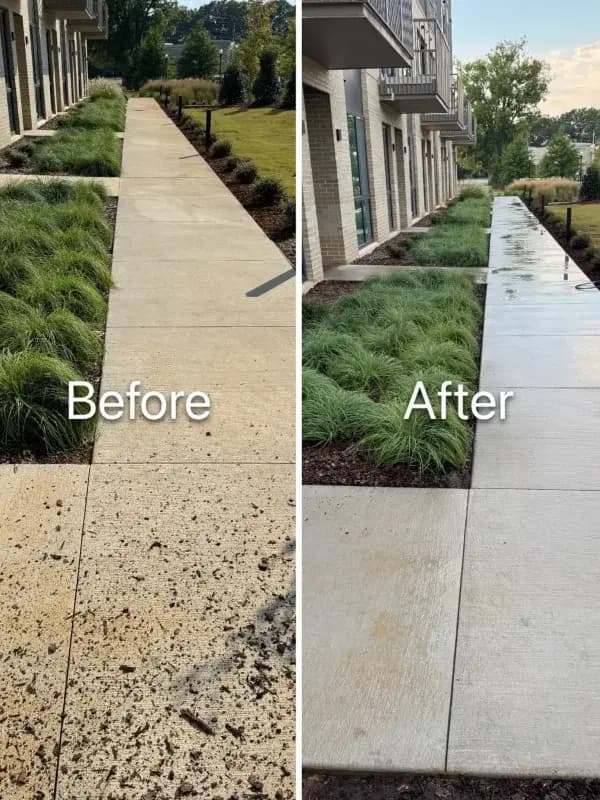
Before and after: a stained concrete walkway outside an apartment building, then clean
ACM job photo

Quick answer

Soft washing cleans with a solution applied at about garden-hose pressure, left to dwell, then rinsed, so the growth is killed rather than blasted off. In North Alabama it is the right method for roofs, siding, soffits and painted surfaces, while concrete and hard masonry still get real pressure. A soft-washed roof usually stays clean for several years.

At a glance

Pressure
About the same as a garden hose
What does the work
The cleaning solution, not the water
Used on
Roofs, siding, soffit, fascia, trim, painted wood and screens
Not used on
Concrete and hard masonry, which get real pressure
Roof results
Typically several years before regrowth
Plants
Wetted, covered and rinsed

The details

What soft washing is

Soft washing applies a cleaning solution at roughly the pressure of a garden hose, lets it dwell (sit and work) for a short time, then rinses it off. The solution does the work. Nothing is blasted off the surface. The growth is killed and released, then washed away.

This matters because most of what dirties a house in North Alabama is alive. Algae, lichen, moss and Gloeocapsa magma, the cyanobacteria that streaks roofs, are colonies, not dirt. Pressure removes the visible layer and leaves the roots, which is why a pressure-washed roof streaks again within a season and a soft-washed one does not.
Where the pressure goes

Our rule is simple. Pressure is for hard, dense surfaces that were poured or laid. Everything that was manufactured, coated or attached to your house gets chemistry instead.

So driveways, walkways, patios and hard masonry get real pressure, using a surface cleaner for even coverage. Pavers sit in between: pressure across the field, less at the joints so the sand between them stays put.

What pressure does to the wrong surface

Asphalt shingles
Pressure strips the granules, the roof's protection from the sun. They do not grow back, so the roof has a shorter life than it did the day before, and the damage does not look like damage for two or three years.
Vinyl siding
Water is driven up behind the laps and into the wall.
Fiber cement
The protective coating is worn away.
Wood
The grain is raised and the softer wood between the growth rings is torn up, leaving a fuzzy surface.
Brick and mortar
The mortar joints between bricks are opened up.

Damage that shows up later

None of that damage shows right away. A pressure-washed roof or wall can look great the day the crew leaves. That is why the method is worth settling before the job, not after.

Landscaping, the honest version

Soft washing solutions will harm plants if they are allowed to. The answer is not a claim that they are harmless. It is wetting the beds first, covering what needs covering, controlling overspray and rinsing down afterward.

That is a promise about process, not about a product, and it is the part of the job that takes extra time. Anyone who says the solution is plant-safe and needs no precautions is describing a different job from the one that protects your beds.

Questions to ask any washing company

  • What method will you use on my roof?
  • What pressure will you use on my siding?
  • How will you protect my plants and beds?
  • Do you use a surface cleaner on concrete?
  • Are you insured for this work?

What affects the price

We price after measuring, line by line, with the materials named. These are the things that move the number.

  • Which surfaces are being cleaned
  • Size of the house or roof, and number of stories
  • How heavy the growth is
  • How much landscaping needs protecting
  • Access around the property

How a job works

  1. Step 1: Free in-home estimate

    We walk your exterior, measure, and show you the options. There is no charge and no pressure.

  2. Step 2: Choose your materials

    You get a written scope with every line and material named. Then we order for your home.

  3. Step 3: Installed and cleaned up

    Cut, fitted, trimmed, cleaned up and hauled away the same day. You never look at a pile of old frames.

From our recent jobs

Real ACM job photos. Every photo marked “ACM job photo” is from one of our own jobs.

See more of our work
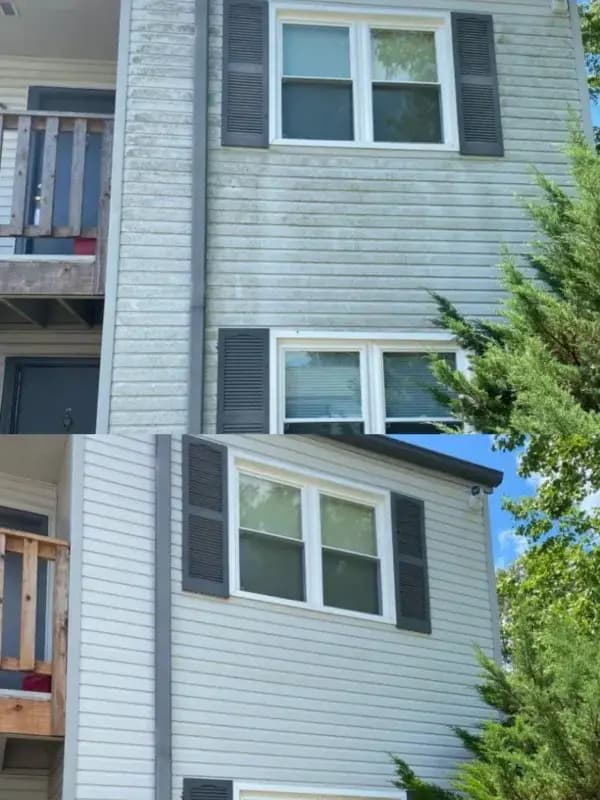
  • Before and after: grey vinyl siding streaked with mildew, then clean after a soft washACM job photo

    Soft wash on vinyl siding

    Mildew and grime removed from vinyl siding at low pressure, so the siding and trim were not damaged.

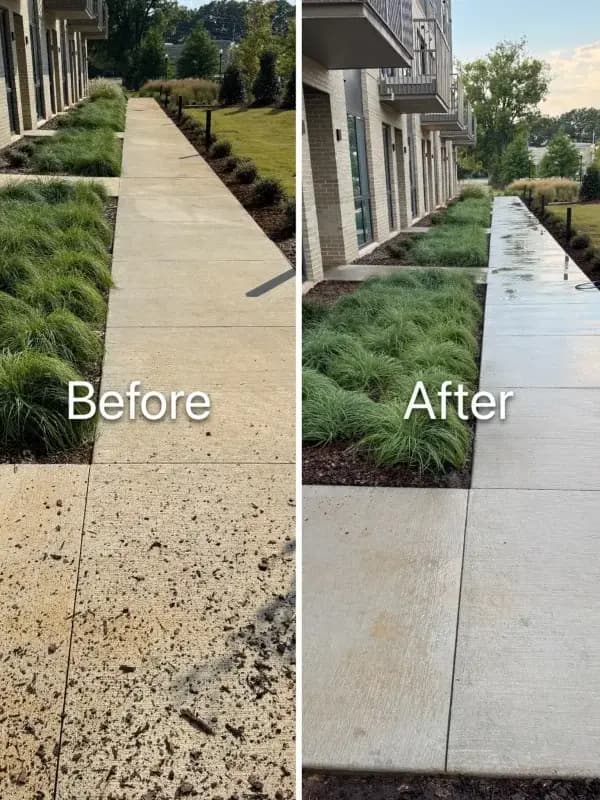
  • Before and after: a stained concrete walkway outside an apartment building, then cleanACM job photo

    Walkway cleaning

    Concrete walkways at an apartment building pressure washed back to clean, even concrete.

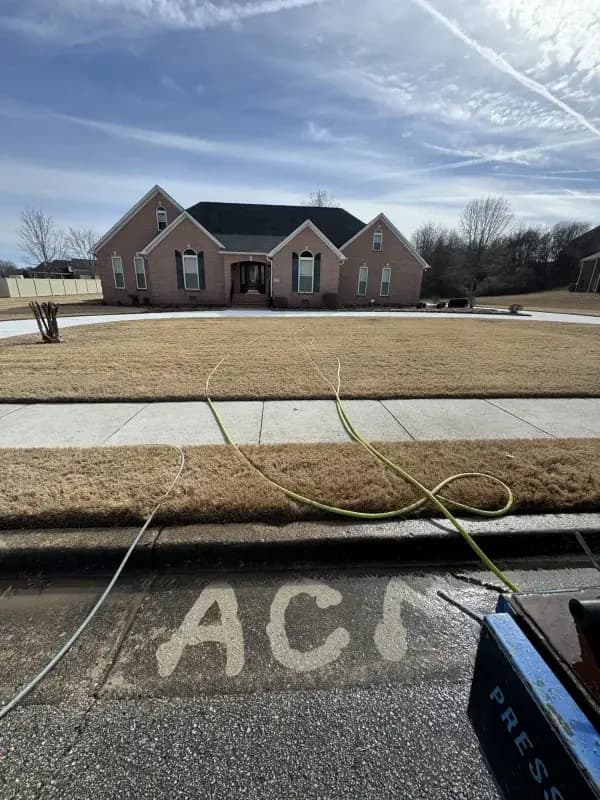
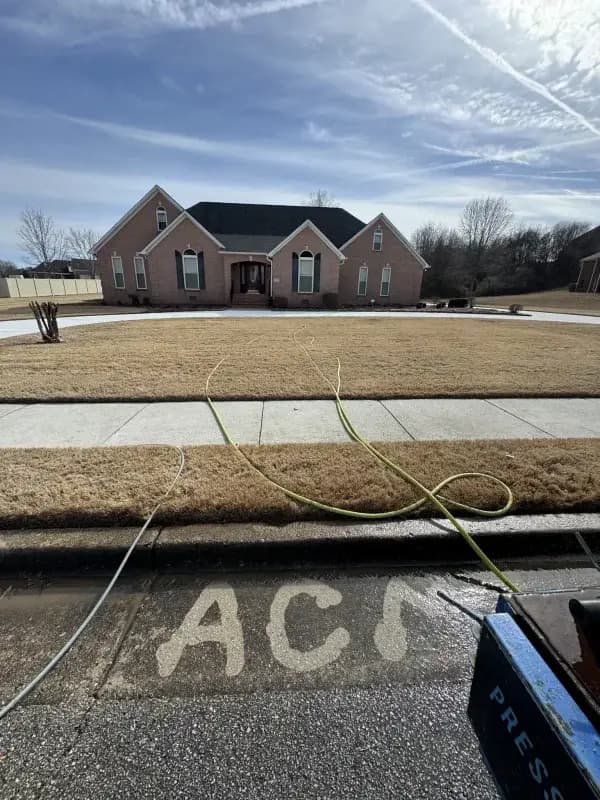
  • A freshly cleaned street apron in front of a brick home, with ACM written in the cleaned concreteACM job photo

    Driveway and curb cleaning

    Driveway and curb concrete cleaned at a brick home, with ACM spelled out in the concrete partway through the clean.

Questions people ask

Is soft washing safe on a roof?

Yes. It is the only method that is. Shingle makers and the roofing industry's own cleaning guidance point to low-pressure cleaning with a solution rather than pressure, and we put no pressure on shingles at any point.

How long does soft washing last?

On a roof, typically several years, because the growth is killed rather than just removed. Pressure washing the same roof buys you a season and costs you granules. Shaded north-facing slopes grow back soonest.

Will it damage my plants?

Not if the crew works properly: wet the beds first, cover what needs it, control overspray and rinse down. It will if they do not. It is fair to ask any contractor how they handle it.

Do you ever use high pressure?

Yes, on the surfaces that call for it: driveways, walkways, patios and hard masonry. The point is matching the method to the surface, not preferring one over the other.

Is soft washing just a gentler pressure wash?

No. The difference is what does the cleaning. In a soft wash the solution kills and loosens the growth, and the water only rinses. In a pressure wash the force of the water does the work.

Why does growth come back so fast after pressure washing?

Because pressure removes the visible layer and leaves the living roots behind. In our warm, humid climate, they grow back quickly. A soft wash kills the colony, so it takes much longer to return.

What surfaces do you soft wash?

Asphalt shingle roofs, vinyl and fiber cement siding, soffit, fascia, trim, painted wood and screens. Anything manufactured, coated or attached to the house gets the soft approach.

Guides on this topic

All articles

We're based in Madison and work across North Alabama, providing soft washing in every area below. We do not work in Tennessee.

All areas and towns
An installer checking a new exterior window with a level
Illustration

Let's get your home looking its best.

Tell us what you're picturing. We'll come out, measure up, and give you a free written estimate, so you know exactly what to expect before any work begins.

  • Free measuring and written estimate
  • No pressure to sign, ever
  • Alabama license #307601, licensed and insured
Made with Modulify