Washing and upkeep
Soft Washing vs Pressure Washing: Which Surfaces Need Which
Soft washing and pressure washing are different jobs. Here is which surfaces on a North Alabama home need low pressure, which can take real pressure and why it matters.
By the ACM Pros team, Madison, AlabamaUpdated 9 minute read
Quick answer
Soft washing uses a cleaning solution at roughly garden-hose pressure to kill and rinse away algae, mildew and grime, and it is the right method for roofs, siding, painted trim and other surfaces that high pressure can damage. Pressure washing uses a strong stream of water to physically blast dirt off, and it belongs on hard surfaces like concrete driveways, walkways and patios. Wood decks and fences sit in between and need low pressure with a gentle hand.
Key takeaways
- Soft washing kills growth with a cleaning solution at low pressure, while pressure washing removes dirt by force.
- Roofs, vinyl and fiber cement siding, painted trim, soffits and screens should be soft washed.
- Concrete driveways, walkways, patios and hard masonry can take real pressure.
- Wood decks and fences need low pressure, because high pressure raises the grain and leaves a fuzzy, rough surface.
- The Asphalt Roofing Manufacturers Association advises against using a power washer to clean algae from asphalt shingle roofs.
- A careful crew pre-wets and rinses plants and sprays siding downward, never up under the laps.
Many people use the words pressure washing to mean any kind of exterior cleaning. In practice there are two very different jobs. One uses force to blast dirt away. The other uses a cleaning solution and very little pressure to kill growth and rinse it off. Using the wrong one on the wrong surface is behind most of the damage we see from house cleaning gone wrong.
Here is a plain guide to which parts of a North Alabama home need soft washing, which can take real pressure, and what to ask before anyone points a spray wand at your house.
The difference in plain terms
Soft washing applies a cleaning solution at about the pressure of a garden hose, lets it sit for a short time and then rinses it off gently. The solution does the work. It kills algae, mildew and similar growth so it lets go of the surface and washes away.
Pressure washing uses a concentrated, high-pressure stream of water to physically knock dirt, stains and growth off a surface. On the right surface it is fast and effective. On the wrong one it can strip, gouge or force water where it does not belong.
Neither method is better in general. The skill is matching the method to the surface, and on most homes that means using both, each in its proper place.
Why so much of the grime here is alive
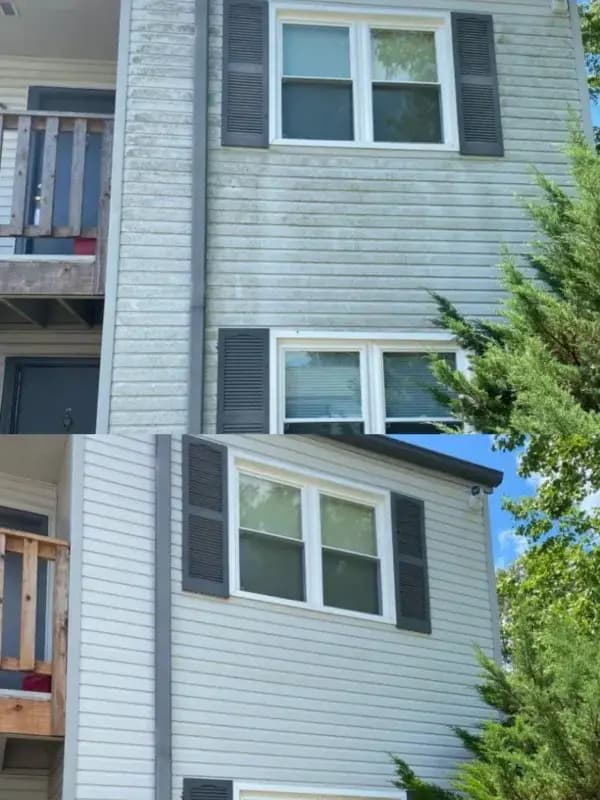
North Alabama's long, humid warm season is ideal for things that grow on houses. The green film on the shady side of the siding, the black spots on a north wall and the dark streaks running down a roof are mostly living colonies, not plain dirt. Homes near the Tennessee River, around Lake Guntersville or under heavy tree cover tend to see it soonest, because they stay damp and shaded longer.
The dark streaks on roofs are a good example. The Asphalt Roofing Manufacturers Association names Gloeocapsa magma as the most common cause and notes that this discoloration is most widespread in warm, humid regions, including the Gulf States. Gloeocapsa magma is a type of cyanobacteria, tiny organisms often called blue-green algae that make their own food from sunlight. Our article on black streaks on your roof explains it in more detail.
Living growth matters because blasting it with water knocks off the visible layer and can leave the rest behind, so it returns quickly. A cleaning solution kills it, which is why a soft-washed surface tends to stay clean longer.
Then there is our heavy spring pollen. It rinses off easily, but it clings to the same shady, damp surfaces where mildew grows, so a wash in late spring often takes care of both at once.
Surfaces that should be soft washed
As a rule, anything that was manufactured, coated or fastened to your house gets soft washed. That includes:
- Asphalt shingle roofs. The granules on shingles protect them from the sun, and high pressure knocks them loose. Our roof washing page explains how we handle roofs.
- Vinyl siding. Siding panels overlap like shingles, and pressure aimed at them can drive water up behind the laps and into the wall.
- Fiber cement and painted wood siding. High pressure can wear the paint or factory coating and leave bare spots and marks.
- Soffits, fascia and trim. The soffit is the underside of the roof overhang, and the fascia is the board along the roof edge where the gutter usually hangs. Both are often vented or painted and do not take pressure well.
- Screens, light fixtures and the outside of gutters. These are easy to bend, tear or flood.
Our house washing service covers siding, soffits, fascia and trim this way, with low pressure from top to bottom.
Surfaces that can take real pressure
Hard, dense surfaces that were poured or laid are where a pressure washer belongs:
- Concrete driveways and parking pads
- Sidewalks, walkways and steps
- Concrete patios and pool surrounds
- Hard brick and stone paving
Even here, technique matters. A rotating surface cleaner, which spins the spray under a round hood, gives an even result without the stripes a hand wand can leave. Pavers sit in the middle: their faces can take pressure, but the sand in the joints between them can be blasted out, so the pressure comes down along the joints. Our driveway and concrete cleaning page covers this work.
The in-between: wood decks and fences
Wood is the easiest surface to ruin with a pressure washer. Each board has hard grain lines with softer wood between them. Too much pressure eats away the softer wood faster than the hard grain, which leaves a fuzzy, ridged surface that feels rough underfoot and takes stain unevenly from then on.
So decks, fences, gates and pergolas get low pressure with a gentle hand, and a cleaning solution does most of the work. Fences often need two approaches on one run, because the sunny side turns grey while the shady side grows a green film. If you plan to stain or seal afterward, the wood also needs to dry all the way through first, which can take longer than people expect in our humidity. Our deck and fence washing page has more detail.
Which method for which surface
| Surface | Method | Why |
|---|---|---|
| Asphalt shingle roof | Soft wash only | Pressure knocks off protective granules |
| Vinyl siding | Soft wash | Pressure can force water behind the panels |
| Fiber cement or painted siding | Soft wash | Pressure can wear away paint and coatings |
| Soffit, fascia and trim | Soft wash | Easily damaged and often vented |
| Wood deck or fence | Low pressure, gentle hand | High pressure raises and roughens the grain |
| Pavers | Pressure on the faces, reduced at the joints | Keeps the joint sand in place |
| Concrete driveway, walks and patio | Pressure washing | Dense surfaces that tolerate real pressure |
What the wrong method does
The trouble with pressure damage is that it rarely shows on the first day. It shows up months or years later.
On a roof
The Asphalt Roofing Manufacturers Association is blunt about this. Its guidance on algae discoloration says not to use a power washer to clean algae from a roof and warns that scrubbing can loosen and remove granules. Those granules shield the shingle from the sun, and they do not grow back. A roof cleaned with high pressure may look fine for a while and then age faster than it should. We put no pressure on shingles at all.
On siding
The Polymeric Exterior Products Association, the trade group for vinyl siding makers, advises reading the siding maker's instructions first, notes that some manufacturers do not recommend power washing at all, and warns never to aim the stream upward, because it can force water behind the panels. Water trapped there can stain, swell and rot what is behind the siding with no sign from the outside.
On wood and masonry
High pressure roughens wood grain for good, and it can erode the mortar between bricks, opening joints that then let water in. None of this is obvious right after the wash, which is why the method is worth asking about before the job, not after.
How a careful crew protects your home and garden
The cleaning solutions used in soft washing can harm plants if a crew is careless with them. The answer is good process, not a promise that the chemistry is harmless. Here is what careful work looks like:
- Pre-wetting plants and beds before any solution goes on, and covering delicate plants where needed.
- Checking openings first, with windows shut and vents, light fixtures and outdoor outlets protected.
- Spraying siding downward, never up under the laps.
- Controlling overspray on breezy days and steering runoff away from beds.
- Rinsing plants and surfaces thoroughly when the job is done.
Before you hire anyone, ask how they will clean each surface. If the answer is one pressure setting and one price for the roof, the walls and the driveway, take that as a warning sign. A good crew will explain which surfaces get soft washed, which get pressure and how they protect your plants.
How often to wash, and the best time to do it
There is no honest one-size schedule. How fast growth comes back depends on shade, nearby trees, which way each wall or roof slope faces and how long it stays damp after rain. North-facing roof slopes and walls under heavy canopy regrow soonest, and two houses on the same street can need cleaning on very different timelines.
A few practical guidelines for North Alabama:
- Late spring is a natural time for a house wash, once the worst of the pollen has fallen, so you are not cleaning twice.
- Watch the shady sides. When green or black growth starts to return on a north wall or roof slope, that is your signal, not the calendar.
- Clean shaded concrete before it gets slick. Walkways and steps that stay in shade can grow a slippery film, which matters for safety as well as looks.
- Wash decks well ahead of staining, and plan the stain for a dry stretch of weather.
Time of day matters too. On a hot, sunny afternoon a cleaning solution can dry on the surface before it has done its job or been rinsed off, which can leave streaks. Careful crews work around the sun, cleaning shaded sides first or adjusting their timing so every surface is rinsed thoroughly.
Businesses face the same choices on a larger scale. We also wash shopping centers, restaurants, hotels, apartment complexes and a church, matching the method to each surface just as we do at home.
Ready for a cleaner house? The ACM Pros soft wash siding and roofs at low pressure and pressure wash concrete, decks and fences with a gentle hand across Madison, Huntsville, Harvest and the rest of North Alabama. Request a free estimate or call (256) 585-6817, and we will walk your exterior and tell you plainly what each surface needs.
Questions people ask
Is soft washing as effective as pressure washing?
On siding and roofs it is usually more effective, because the cleaning solution kills algae and mildew instead of just knocking off the top layer. That tends to keep surfaces cleaner for longer. On concrete, real pressure is still the right tool.
Can I pressure wash my vinyl siding myself?
You can damage it if you are not careful. The siding industry's trade group advises checking the siding maker's instructions, since some do not recommend power washing, and never aiming the spray upward where it can force water behind the panels. A low-pressure soft wash avoids that risk.
Will soft washing hurt my plants and grass?
It can if the crew is careless, which is why pre-wetting, covering delicate plants, controlling overspray and rinsing afterward matter. With that process, plant damage is avoidable. It is fair to ask any washing company exactly how they protect your beds.
Should a shingle roof ever be pressure washed?
No. The Asphalt Roofing Manufacturers Association advises against using a power washer to clean algae from asphalt roofing, because pressure and scrubbing can strip the protective granules. Shingle roofs should be cleaned with a low-pressure soft wash.
Can you clean my deck before I stain it?
Yes. We clean wood decks and fences at low pressure with a gentle hand so the grain is not torn up. Give the wood time to dry all the way through before staining, which can take a while in humid weather.
Do you wash commercial properties?
Yes. Along with homes, we wash shopping centers, restaurants, hotels, apartment complexes and a church across North Alabama. The same rule applies: soft washing for building surfaces and real pressure only where the surface can take it.