Costs and planning
Window Replacement Cost in Huntsville: What Moves the Price
What actually moves the price of window replacement in Huntsville, and why a per-window average is how homeowners get surprised.
By the ACM Pros team, Madison, AlabamaUpdated 9 minute read
Quick answer
Window replacement cost in Huntsville depends on how many openings you have and their sizes, the frame material, the glass package, and above all whether the existing openings are sound or need repair. An insert replacement that keeps the old frame costs less than a full-frame replacement, which removes everything down to the framed opening in the wall. No honest contractor can give a firm price without measuring, so ask for a written, per-opening quote with every material named.
Key takeaways
- No contractor can quote a fair whole-house price without measuring, because the condition of each opening is the biggest unknown.
- Opening count and size, frame material, glass package and repair needs are the four things that move the number.
- Insert replacement keeps the existing frame and costs less; full-frame replacement is the durable answer where there is rot or shifted framing.
- Ask for a written, per-opening quote that names the manufacturer, product line, frame material and glass package, plus a plan for what happens if rot is found.
- If the budget is fixed, spend on installation first and on better glass for your sunniest walls second.
- A price that is only good if you sign tonight was never the price.
It is the first question almost everyone asks, and it is a fair one: what will new windows cost? The answer depends on a handful of choices you make and on the condition of the openings your old windows sit in.
This guide will not give you a per-window average, because averages are how homeowners get surprised. Instead, it explains what actually moves the number in Huntsville and across North Alabama, how to read a quote, and where your money does the most good.
Why nobody can quote you a price over the phone
Every contractor in this market gets asked for a phone price, and the honest answer is unsatisfying: it depends on what we find when the old unit comes out.
That is not evasion. Picture the same vinyl double-hung window, the common style with two panels that slide up and down, going into two houses. In one the opening is sound and square, and in the other the sill at the bottom of the frame has rotted.
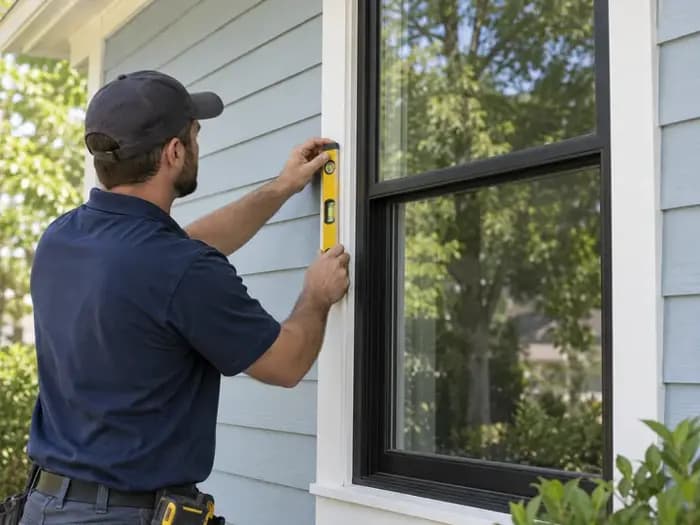
Those are two different jobs with two different prices, and from the outside they can look identical. Anyone who quotes a firm whole-house number without measuring is either padding for the worst case or planning to raise it later. A fair price starts with someone measuring every opening and checking the condition of each one.
The four things that actually move the number
1. How many openings, and how big
This is the most obvious variable and the one people already understand. Each window is an opening, and more openings mean more material and more labor.
Size matters too, and not in a straight line. Larger openings need thicker glass and stronger frames, so a big window is not simply a small window's price scaled up, and two houses with the same number of windows can price quite differently. Specialty units such as bay and bow windows, which project out from the wall, involve more structure and labor than a standard opening.
2. Frame material
Vinyl is the value benchmark. Fiberglass costs meaningfully more and earns it on exposed walls that take the most sun. Wood costs the most and comes with a maintenance commitment. Aluminum has its place, mostly in commercial work.
For most Huntsville homes, vinyl is the correct answer. It holds its shape, never needs painting and insulates well, which covers what most homeowners want from a window.
3. Glass package
The glass package is the combination of panes, coatings and gas fill in the window. Low-E glass with an inert gas fill is the practical baseline here. Low-E, short for low emissivity, is a thin coating that reflects heat while letting light through, and the gas, usually argon, slows heat moving between the panes.
Beyond that baseline, the coating should follow the elevation, meaning the side of the house the window faces. A west wall taking full afternoon sun has a different requirement from a shaded north wall. Our guide to Low-E glass explains the choices.
Whatever you choose, ENERGY STAR recommends having the exact U-factor and SHGC of each window written into the contract. U-factor measures how easily heat passes through the window, and SHGC, the solar heat gain coefficient, measures how much of the sun's heat gets in.
4. Whether the opening needs repair
This is the one that changes a quote mid-job if nobody looked for it first, and it is the single most common reason the scope of work changes. Water that has been getting past an old window for years can rot the sill and sometimes the framing in the wall around it.
A careful contractor looks for signs of this at the estimate: soft wood, staining, and sashes, the moving glass panels, that bind because the frame has shifted. When we find rot during the work, we photograph it before covering anything, so you see exactly what was found and why it matters.
Insert or full-frame: the biggest single fork
There are two basic ways to replace a window, and the choice between them is the biggest swing in any window quote.
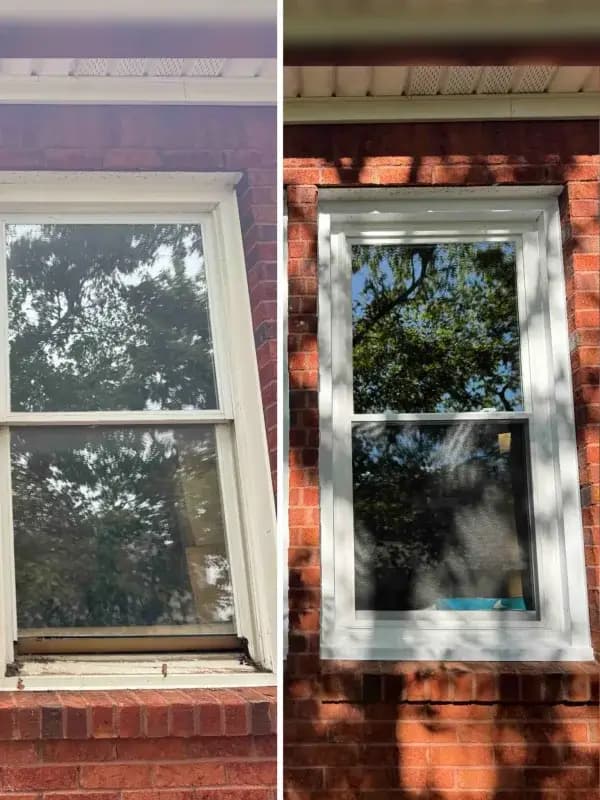
An insert replacement keeps the existing frame and sets a new window inside it. It is faster, costs less and is less disruptive, and when the frame is sound it is the right answer.
A full-frame replacement removes everything down to the rough opening, the framed hole in the wall. It costs more and takes longer, and it is the only durable option when there is rot, framing that has shifted out of square, or water staining at the sill. It also allows a sill pan, a waterproof tray under the window that catches water and sends it outside, to be installed.
| Question | Insert replacement | Full-frame replacement |
|---|---|---|
| What stays | The existing frame | Nothing; the opening goes back to the framing |
| Relative cost | Lower | Higher |
| Time per opening | Shorter | Longer |
| Disruption | Less | More |
| Best when | The frame is sound, square and dry | There is rot, shifted framing or sill staining |
| Glass area | Slightly smaller, since the new frame sits inside the old one | Kept at or near the original size |
Huntsville's range of housing means both come up constantly. Older homes in the established districts skew toward full-frame, while newer builds on the edges of the city skew toward insert. We determine which applies at measuring, not at install, so it is in the quote from the start. Our article on insert vs full-frame replacement goes deeper.
What your kind of house usually means
Homes around Huntsville fall into a few broad groups, and each tends to lean one way:
- Mid-century ranches with original single-pane aluminum windows stand to gain the most comfort. The open question is the condition of the openings after decades of service.
- 1980s and 1990s subdivisions often have first-generation double-pane windows with failing seals. Many have sound frames suited to inserts, but any sill with staining needs a closer look.
- Newer builder-grade homes usually have square, dry openings that suit inserts, unless the original installation let water in.
- Historic homes in Twickenham, Old Town and Five Points more often call for full-frame work, wood windows or exterior storm windows to keep their character, which changes both the scope and the price.
If your home was built before 1978, federal rules add one more consideration. The EPA's Renovation, Repair and Painting rule requires that anyone paid to disturb painted surfaces in those homes be certified and follow lead-safe work practices, and replacing windows usually disturbs paint.
Other things that can appear on a quote
Beyond the four main drivers, a few details can change the scope on particular openings:
- Access. Second-story windows and openings over porches, steep slopes or landscaping take more time and equipment.
- Shape and style. Arched tops, very large picture windows and projecting units cost more than standard rectangles.
- Exterior finish. How the outside of the opening is trimmed and sealed where it meets brick or siding.
- Removal and cleanup. Taking out and hauling away the old windows.
- Repairs to the opening. Sill, frame or framing repairs, priced or explained in writing before the work starts.
None of these should be a surprise. Each belongs in the written scope, not in a conversation after the job.
How to read a per-opening quote
A fair estimate is specific. Here is what to look for:
- Line items, not allowances. An allowance is a placeholder amount that can change later. Line items say exactly what is being done to each opening.
- Materials named. The manufacturer, the product line, the frame material and the glass package, with the U-factor and SHGC.
- A price per opening. One whole-house figure hides the details. Per-opening pricing is how you compare two quotes honestly, because it shows where one contractor has assumed inserts and another has assumed full-frame.
- A day count. How long the work will take, so you can plan around it.
- A plan for rot. An explicit statement of what happens if an opening reveals rot, so the number cannot move without a conversation.
- No pressure deadline. The estimate should not expire. If a price is only good if you sign tonight, that was never the price.
When one quote is far below the others, look at what it leaves out. Common gaps are an allowance where a repair plan should be, glass with no ratings listed, and no mention of flashing, the waterproofing layers that steer water around the window. Those gaps tend to show up later as extra charges or problems.
ENERGY STAR's buying guidance also suggests getting quotes from several installers and asking each to break the price down by labor and materials. Our guide on how to compare contractor quotes walks through it step by step.
Where the money is best spent
If the budget is fixed, spend it on installation before you spend it on the window. A mid-range window properly flashed into a prepared opening will outlast a premium window forced into a wet frame, every time.
The second-best place is glass on your worst elevation. Upgrading the coating on the three windows that take the afternoon sun will do more for comfort than upgrading all fourteen windows by one frame tier.
A few other ways to stretch a budget:
- Replace the windows with water damage or failed seals first, and plan the rest as a second phase. Per-opening pricing makes the phases easy to budget.
- Keep standard sizes and styles where they work, since custom shapes cost more.
- Choose vinyl for most of the house and save fiberglass for the most exposed walls.
- If you own wood windows worth keeping, ask about exterior storm windows. ENERGY STAR notes that they cost far less than replacement windows and can be installed over the existing ones.
The only way to know what your windows will cost is to measure them. The ACM Pros offers free in-home estimates for window replacement in Huntsville, Madison and across North Alabama, with a written, line-item scope, materials named, each window priced per opening, and no pressure to sign. Request your free estimate or call (256) 585-6817.
Questions people ask
Why won't contractors give a window price over the phone?
Because the biggest variable, whether each existing frame is sound, cannot be known until someone looks and measures. A phone price is either padded to cover the worst case or likely to change later. A measured, per-opening quote is the only number you can plan around.
Is insert replacement cheaper than full-frame?
Yes. An insert keeps the existing frame, so it uses less material and labor and goes faster. Full-frame costs more because the old window comes out down to the framed opening, but it is the only lasting choice where there is rot, shifted framing or a stained sill.
Do I have to replace every window at once?
No. Many homeowners start with the windows that have failed seals or water damage and do the rest later. Per-opening pricing makes it easy to see what each phase will cost before you commit to it.
What should a window replacement estimate include?
Line items for each opening, the manufacturer, product line, frame material and glass package by name, a price per opening, a day count, and a written plan for what happens if rot is found. It should not come with a deadline to sign.
Are more expensive windows worth it in Huntsville?
Sometimes, but not across the board. Better glass on south and west walls usually does more for comfort than stepping every window up a frame tier. Installation quality matters more than either, because even a premium window performs poorly in a wet, poorly flashed opening.
What happens if rot is found during installation?
With a good contractor, it should not be a surprise on the bill. The estimate should already say how rot will be handled, and the damage should be shown to you before it is covered. At The ACM Pros we photograph any rot before covering anything.
Does a free estimate commit me to anything?
It should not. The ACM Pros provides free in-home estimates with a written, line-item scope and no pressure to sign. Take the time you need to compare it with other quotes.